
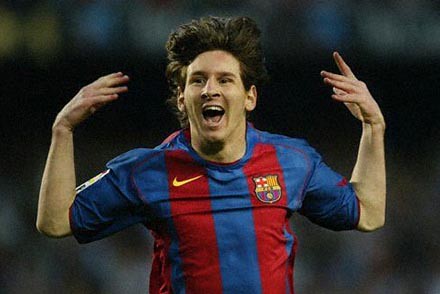
In an era of monotonous tactics and manufactured playing styles, all done in the name of strategy, it is always a breath of fresh air when someone runs against the grain and plays their natural game. It is always a bonus when it pays off and said sportsman succeeds whilst doing so. There should be very little bewilderment as to the reasons why the likes of Sonny Bill Williams, Benji Marshall, Lionel Messi and Dwayne Wade are so damn popular in their respective sporting codes. All four refuse to conform to the “strategic play” offered up in a time where sporting analysis and game plan development seem to be as influential as the players themselves.
The fact is, with so much pressure on coaching staff, players, clubs, club executives, corporate sponsors and television moguls; the need to win matches often blinds the true reasons why people are interested in sport in the first place – entertainment. We watch to be amazed, we play to progress on the journey to success as a team, and we coach to lead others to reach their goals, dreams and aspirations. None of us, when we were five years old, gave a shit about merchandise deals. None of us when we were five years old gave a shit about television ratings. None of us when we were five years old gave a shit about the market value of sports people. It was the game that drew us in – end of.
Now I’m not bagging professionalism in sport – in fact I generally feel quite the opposite. It gives me great joy to see a guy come from nothing, play his heart out and eventually get that opportunity to step into the spotlight and try and pave his way towards a sporting career. It gives me greater success to see people carve out that career. Someone like Joe Galavao, in my mind, has done what so few else have failed to achieve – he’s had to switch rugby league clubs at least four times to ensure his dream is kept alive, he’s been dropped, injured and told he wasn’t needed, yet he still had the balls to stick it out and prove the critics wrong. Today, he’s starting for one of Sydney’s leading NRL clubs and probably has a decent looking bank account to boot. To me, Joe Galavao is a shining representation of what sport can provide for a young kid from the streets of South Auckland who dares to dream.

What I will say, is that professionalism and sport has created a number of external factors which appear to be having a direct impact on the intrinsic qualities which make sport such an entertaining commodity to market in the first place. What does the pressure to win mean for the likes of Dan Carter, heading into the biggest season of international rugby union he, and the All Blacks, have arguably ever faced. Will he chance his arm with five to go when the All Blacks are down by three? Or will they work the ball toward the middle of the pitch so he can have a crack at field goal? When people stream through those gates come World Cup time, you can bet your bottom dollar they aren’t doing it to watch field goal-a-thons, and when they run promotional packages on TV leading up to the Cup, you can bet your bottom’er dollar that they won’t be including much footage of penalty goals. Rugby fans know the story, they’ve seen it the last four Cups in a row, and nobody will be surprised as to what may happen in those final stages as the pressure is amplified.
It’s a double edged sword of sorts, as I’ve somewhat touched on above. Players, clubs, executives, coaches, TV moguls and corporate sponsors are all after the same thing – success. Players want to win, in order to reach their goals and pocket some cash in the process. Clubs want success so that their image will attract the fans through the gates and the expenditure which comes with it. Execs’ want success so that they can market their club as an avenue whereby corporate sponsors will want to spend some of their marketing budget, whilst the sponsors themselves want to align themselves with the most cutting edge popular culture products they can. TV moguls want people to tune in, the more people who do so, the more money they can demand from advertisers based on the heavily flawed Neilson ratings system. All of this can be achieved through spontaneity, creative flair and sporting brilliance – which it should, though often is compromised with the fear that throwing the dice may turn up a one instead of a six.

Sporting codes try and conjure up rules and methods to promote attacking and exciting play, but what this does is often compromise why that sport was so popular and exciting in the first place, case in point – rugby union. It’s going to happen to football too, despite traditionalists holding on for dear life, as soon as technology is utilised, the spiral will begin to spin downwards. It’s happened to rugby league, though thank fuck the game has managed to reinvent itself and absurd amount of times to cater for all the problems that come with rule changes and implementations. Look at the joke that is world cricket. What they really need to do is start at the grass roots and encourage sporting play whereby those with the big bucks have little to no say as to what happens on the field. Clubs and codes alike have to have the balls to stand up to big business and say by all means invest in us, we will deliver, but trust in our sport to do so. You don’t see many footy players questioning the ability of Nike to market their sporting apparel to women in their 50s, yet there is little doubt the MNC athletic wear company has huge influence in the way many clubs and teams operate, based on the dollar factor. Yet if they weren’t exciting and original in the first place, that money would never have been invested.

To put it simply – Imagine of Benji Marshall played like Peter Wallace. Imagine if Sonny Bill Williams played like Brendon Laney. Imagine if Lionel Messi played like Chris Killen. Imagine if Dwayne Wade played like Paul Henare. No one would give, for lack of a better term, a flying fuck, about any of these sports people. It is because they are so damn good the way they are that they are so successful in the first place. You want to know the reason why English football is in the gurgler on the international playing level? Look no further than corporate interest. You want to know why New Zealand cricketers have no timing, no footwork and no ability to read the play? Look no further than corporate interest. You want to know the reason why the New Zealand Herald provides very little analysis in their sporting coverage? Look no further than corporate interest.
Long live the flick pass, the banana kick, the alley oop and the bicycle kick.

No comments:
Post a Comment